Bangladesh’s Rising Tide of Islamist Vigilantism: Women and Minorities Pay the Price Amid Government Inaction
- Mahamunimodi Team
- Jun 9
- 4 min read

A report released by the UN Human Rights Office in early 2025 paints a chilling picture of Bangladesh’s current human rights crisis. The report concluded that the scale, organization, and systematic nature of recent violent incidents strongly suggest either active complicity or calculated inaction on the part of local authorities. However, in a move widely seen as evasive, interim Prime Minister Muhammad Yunus has refrained from directly condemning the wave of violence, describing the situation only as “regrettable unrest.”
The reality on the ground tells a far graver story. Following organized assaults by Muslim mobs on Hindu neighborhoods, attackers redirected their fury toward women accused of violating Islamic norms of dress and behavior. Across Bangladesh, women have found themselves under attack for what they wear and how they choose to present themselves. Social media platforms are flooded with distressing videos showing women being publicly harassed for wearing Western-style clothing or for not wearing the hijab.
One such video, which went viral earlier this year, captured the brutal assault of a young woman near a university campus in Rajshahi. Her "offense" was simply wearing jeans and a t-shirt. Despite the outrage that followed, no arrests were made, a pattern that has become alarmingly common in similar cases.
These so-called “morality enforcement” campaigns appear to be carried out by self-appointed vigilantes, many of whom are closely linked to Islamist student groups and clerical networks. In many cases, police not only refused to intervene but actively discouraged victims from pursuing legal recourse.
The scope of the harassment is nationwide. Women report being targeted in markets, streets, public transportation hubs, tourist destinations, and even universities. The abuse ranges from verbal assaults and sexist slurs to physical violence and sexual harassment. Many women say they now avoid going out alone or in Western-style clothing.
High-profile women have not been spared. Shaila Bithi, a celebrated mountaineer, was attacked in broad daylight by a group of men on a pedestrian bridge in Dhanmondi, suffering multiple injuries. Veteran journalist Jharna Roy shared her own experience of being shamed for not wearing a headscarf while dining with her family at a street-side restaurant. In Cox’s Bazar, an area that has seen an influx of radical Islamic sentiment, numerous women were harassed, and several were assaulted — footage of these incidents continues to circulate online, heightening public anxiety.
Religious minorities face particular vulnerability. One Hindu woman was mocked for wearing a bindi, a traditional symbol of Hindu identity. Another woman described being berated for not wearing a burqa during a job interview. Reports of stalking, harassment, and intimidation have surged, with social media platforms documenting a torrent of testimonies from women across the country. Many recount being subjected to lewd remarks, verbal aggression, and physical intimidation by Muslim men emboldened by the climate of impunity.
The climate for women’s rights has deteriorated rapidly. On university campuses, female students report being pressured to adopt the hijab. In some cases, cafeterias and dormitories have been unofficially segregated along gender lines — a practice that echoes the Taliban-like policies seen in other Islamist-controlled regions.
This resurgence of Islamist influence is not a coincidence. Groups such as Hefazat-e-Islam, long a vocal advocate for Sharia-based governance, have gained renewed political traction. They now organize mass rallies, demanding laws enforcing Islamic moral codes and stricter punishments for perceived blasphemy. Thousands of social media pages amplify these demands, spreading hatred toward non-Muslims and promoting misogynistic narratives. Prominent Islamic leaders are routinely invited to state-run television programs, where they shape public discourse with calls for a return to religious orthodoxy.
In 2024, a massive rally in Narayanganj, attended by hundreds of thousands, demanded the death penalty for blasphemy and a national law requiring all women to wear the burqa. While these demands have not yet been formally adopted, the government has taken no action to curb such extremist rhetoric, fueling fears of Bangladesh moving toward Taliban-style governance.
The interim government led by Muhammad Yunus stands accused of failing to curb the rising tide of Islamist vigilantism and of neglecting its duty to protect women and minorities. Critics argue that Yunus’s tacit alliances with radical groups such as Hefazat-e-Islam have enabled this dangerous drift. Under international pressure, Bangladesh had made some progress in promoting pluralism and protecting minority rights during the previous regime, aided by global development agencies. But much of this progress now appears at risk of being swiftly undone.
For many citizens — especially women, Hindus, Buddhists, Christians, and secular Muslims — daily life is now steeped in fear: fear of judgment, fear of violence, fear of losing one’s place in society. The future of Bangladesh depends not only on restoring democratic order through free and fair elections, but also on reaffirming core values of pluralism, tolerance, and freedom of expression — values now under direct assault.
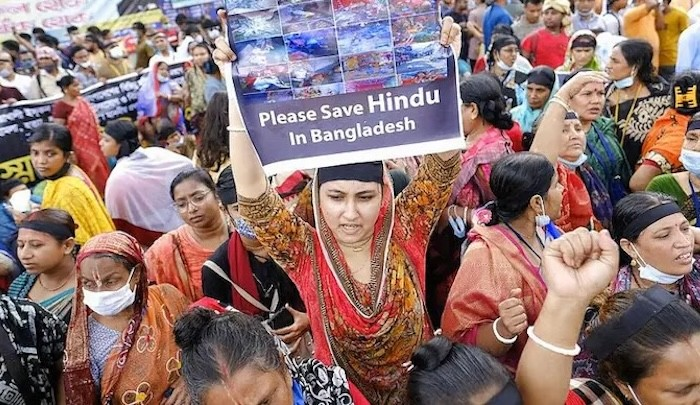
Yunus, facing widespread criticism both domestically and internationally, is accused of enabling jihadist ideology and betraying Bangladesh’s democratic ideals. Repeated temple attacks, forced dress codes, and systematic harassment of women have become flashpoints fueling public unrest. Secular activists, women’s rights groups, and Hindu organizations have taken to the streets in protest. Many are drawing parallels between today’s unrest and the mass mobilizations that ultimately led to the fall of Sheikh Hasina’s regime.
It is not inconceivable that Yunus’s political future now hangs in the balance. Growing public anger, combined with the relentless activism of Bangladesh’s civil society, may well trigger another wave of protests — protests that could ultimately lead to Yunus’s downfall, much like that of his predecessor.


Comments