Economic Achievements made by India!!
- MGMM Team
- Sep 4, 2023
- 5 min read
Introduction:
Chandrayaan 3 is India's third lunar exploration mission. It included an orbiter, a lander named Vikram, and a rover named Pragyan. India's accomplishment ranks fourth in quantity, a testament to the countless individuals at ISRO who laboured relentlessly behind the curtain—scientists, engineers, technicians, and supporting personnel—who turned the vision into a tangible achievement.
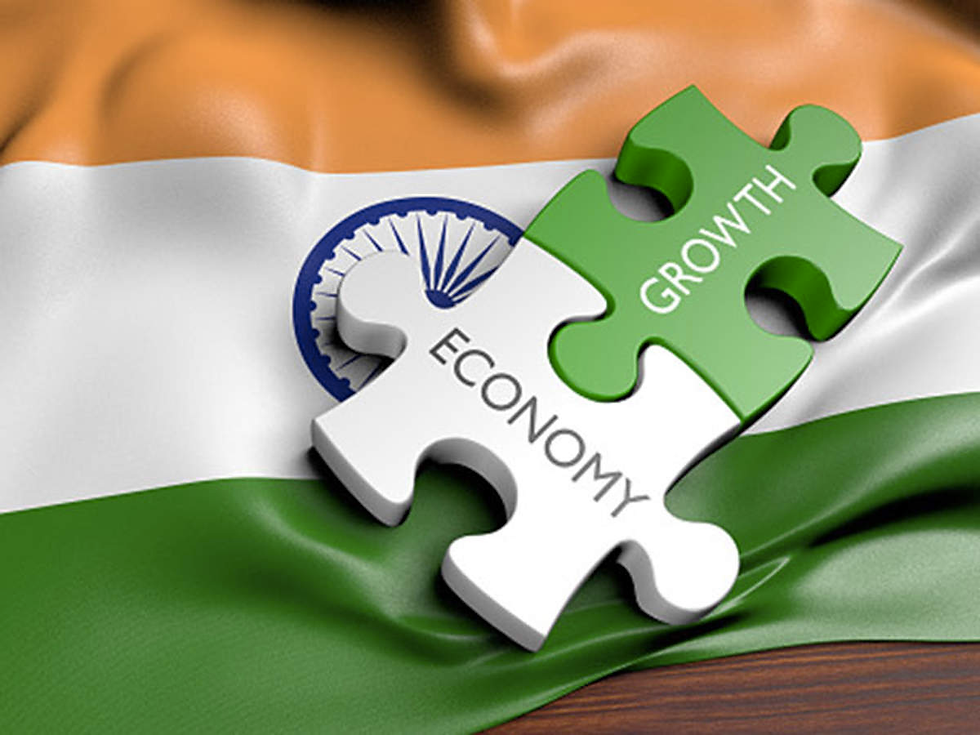
India has achieved several notable economic milestones, including a rapidly growing economy, significant foreign direct investment, and improvements in various sectors. Some achievements include becoming one of the world's largest economies by GDP, advancements in information technology and software services, growth of a robust pharmaceutical industry, and efforts to promote renewable energy sources. It's one of the world's largest economies, characterised by a diverse mix of industries including services, manufacturing, and agriculture.
With a large population and a growing middle class, India has become a hub for technology, outsourcing, and entrepreneurship. The country's economic growth has been driven by various factors such as a young workforce, increasing urbanisation, and economic reforms.
According to the Economic Survey, employment levels have risen in the current financial year, as the Periodic Labour Force Survey (PLFS) shows that the urban unemployment rate for people aged 15 years and above declined from 9.8 per cent in the quarter ending September 2021 to 7.2 per cent in the same quarter in 2022.
Certainly, here are some notable economic achievements in India over the past six years:
GDP Growth:
India maintained a relatively strong GDP growth rate, although it faced fluctuations due to global and domestic factors. As of my last knowledge update in September 2021, India's GDP was one of the largest in the world, with a focus on services, agriculture, and industry sectors.

Ease of Doing Business:
India improved its ranking on the World Bank's "Ease of Doing Business" index, showcasing reforms in areas like starting a business, getting construction permits, and resolving insolvency.India has moved up six spots since the last report. From the 14th rank for the period between 2018-22, India now stands at 10th rank in terms of business environment for the period 2023-27. India jumps 79 positions from 142nd (2014) to 63rd (2019) in 'World Bank's Ease of Doing Business Ranking 2020'. To further enhance the ease of doing business in the country more than 39,000 compliances have been reduced and more than 3,400 legal provisions have been decriminalised.
Foreign Direct Investment (FDI):
The FDI policy is governed in India by the industrial policy and promotion department. In India, some prohibited or permitted sectors in India. Under this new regime, there were two ways in which foreign investors invested in India. One is the automatic route, and another is the government route. India attracted significant FDI inflows, indicating improved investor confidence in the country's economic prospects.India as the third-largest host country for greenfield project announcements and the second-largest for international project finance deals in South Asia. In the fiscal year 2022-2023, Singapore was the largest investor in india, with investments worth $17.2 billion. The World Investment Report 2022 of UNCTAD places India as the seventh largest recipient of FDI in the top 20 host countries in 2021.

Digitalization:
Over the past decade, India has witnessed significant growth in digitalization, with advancements in areas such as e-governance, e-commerce, digital payments, and technology-driven innovation. Initiatives like Digital India have played a pivotal role in promoting digital literacy, expanding internet connectivity, and enabling digital services for citizens.
This digital transformation has the potential to improve efficiency, accessibility, and inclusivity across sectors in the country. The government's "Digital India" campaign led to increased internet penetration, digital payments, and technology adoption across various sectors.
Infrastructure Development: Initiatives such as the "Bharatmala" project aimed at building highways, along with urban development schemes, enhanced the country's infrastructure.
Manufacturing and Industry:
The "Make in India" initiative aimed at boosting domestic manufacturing, encouraging both local and foreign investments in various industries.India's manufacturing and industrial sector has been a key contributor to its economy for decades. The country has a diverse range of industries, including textiles, automobiles, pharmaceuticals, electronics, and more. However, the manufacturing sector's contribution to India's GDP has been relatively lower compared to other sectors.
Efforts are being made to enhance the manufacturing landscape in India, such as the "Make in India" initiative, which aims to encourage domestic manufacturing, attract foreign investment, and create jobs. The government is focusing on improving infrastructure, simplifying regulations, and promoting innovation to boost the sector's growth.
Financial Inclusion:
Schemes like "Jan Dhan Yojana" and "Pradhan Mantri Mudra Yojana" contributed to increased financial inclusion and support for small businesses. It mobilises savings that promote economic growth through productive investment. It promotes financial literacy of the rural population and hence guides them to avoid the expensive and unreliable financial services.Financial Inclusion in India.

FI now has a far-reaching global significance, particularly in emerging nations. By integrating more people into the formal financial system, emerging economies hope to increase economic growth and reduce poverty. FI has been developed as a new theory of poverty-eradicating economic growth.
Energy Sector:
The expansion of renewable energy sources, like solar and wind, helped diversify the energy mix and reduce dependence on fossil fuels.India is the third largest producer of electricity in the world. During the fiscal year (FY) 2022–23, the total electricity generation in the country was 1,844 TWh, of which 1,618 TWh was generated by utilities. India saw the highest year-on-year growth in renewable energy additions of 9.83% in 2022.The installed solar energy capacity has increased by 24.4 times in the last 9 years and stands at 67.07 GW as of July 2023. The installed Renewable energy capacity (including large hydro) has increased by around 128 % since 2014.

Start-up Ecosystem:
India's start-up ecosystem flourished with growing numbers of tech and innovation-driven companies receiving funding and global recognition.Indian Startup Ecosystem has seen exponential growth in the past few years (2015-2022): 15X increase in the total funding of startups. 9X increase in the number of investors. 7X increase in the number of incubators.There are various things that have contributed to the boom of the Indian startup ecosystem. These include: A massive and developing populace of internet users. India has over 750 million internet users, and this variety is expected to develop to over 1 billion through 2025.
Monetary Reforms:
Measures like demonetization and the implementation of the Goods and Services Tax (GST) aimed at formalising the economy and improving tax collection.
Agricultural Reforms:
Recent agricultural reforms attempted to modernise the sector, provide farmers with better market access, and increase income potential.India's agriculture sector has been witnessing robust growth with an average annual growth rate of 4.6 per cent over the last six years.Fiscal policy statements highlighted that Indian agriculture sector is projected to grow by 3.5 per cent in FY 2022-23. Apart from meeting domestic requirements, India has also rapidly emerged as the net exporter of agricultural products in recent years.
Global Recognition:
India's economic growth and potential continued to attract attention from international organisations and investors.
Remember that these achievements come alongside ongoing challenges, such as unemployment, poverty, and income inequality. The interpretation of these achievements can vary based on different perspectives and economic indicators.

Conclusion:
Undoubtedly, India has made remarkable strides in its economic journey. Notable accomplishments encompass swift GDP growth, a thriving IT industry, strides in space technology, and enhancements in human development indicators. Nonetheless, the nation grapples with persistent challenges such as poverty, income disparity, and infrastructure deficiencies. This economic voyage of India showcases achievements intertwined with sustained endeavours to tackle a spectrum of obstacles.



Comments