India: Muslim Coach Accused of Sexually Exploiting Hindu Girls; Hidden Room Found in Shooting Academy
- Mahamunimodi Team
- May 27
- 4 min read

The ongoing police investigation into Mohsin Khan—founder of a sports shooting academy—has unearthed a deeply disturbing and chilling trail of evidence that points toward systematic sexual abuse, blackmail, and possible religious targeting. Following his arrest, law enforcement officers confiscated multiple electronic devices, including smartphones, hard drives, and surveillance systems installed at the academy. Upon forensic examination, authorities were horrified to discover a large collection of explicit video recordings, many of which are now suspected to have been made without the victims’ knowledge or consent.
According to investigators, these recordings were not only voyeuristic in nature but were also allegedly weaponized as tools of coercion. Officers familiar with the case report that Khan used these videos to silence the victims. “If any of the girls tried to leave the academy or threatened to expose him, he would reportedly threaten to leak the videos online or send them to their family members,” one senior police official said. This psychological and emotional manipulation kept many of the victims trapped in a cycle of fear and abuse.
The case first came to light when a 24-year-old former trainee, who had once considered Khan a mentor, stepped forward and accused him of raping her under the false pretense of advancing her sports career. Her complaint further alleges that after she got married, Khan attempted to blackmail her using explicit footage. Soon after, a 20-year-old woman also lodged a complaint, alleging that Khan had molested her when she was still a minor and under his supervision for rifle training between 2021 and November 2023.
As the investigation gathered steam, two more women courageously came forward, providing corroborating testimonies. Among them was a 32-year-old former employee of the academy, who accused Khan of workplace harassment. Notably, her complaint has been filed under the Scheduled Castes and Scheduled Tribes (Prevention of Atrocities) Act—indicating caste-based discrimination or exploitation may also have been a factor.
Khan now faces a slew of serious legal charges under multiple sections of the Indian Penal Code, including rape, illegal confinement, and criminal intimidation. He has also been booked under the stringent Protection of Children from Sexual Offences (POCSO) Act, as well as provisions of the SC/ST Act.
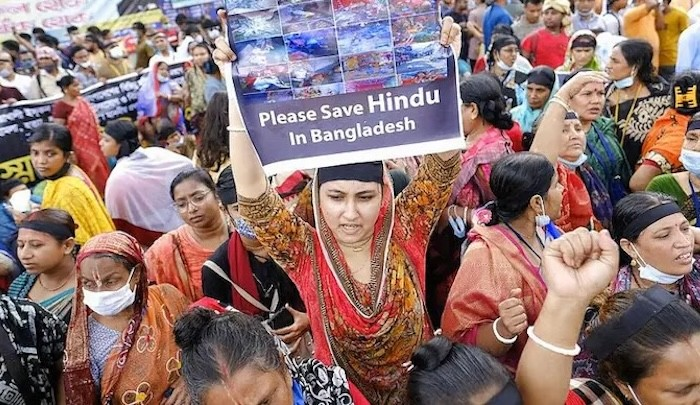
This case has triggered nationwide outrage and protests, particularly among women's rights activists, child protection advocates, and members of the Hindu community. Outside Khan’s now-shuttered academy, demonstrators demand swift legal proceedings and the harshest possible punishment. The Bajrang Dal, a Hindu nationalist organization, has publicly described the case as an instance of “Love Jihad”—a term often used to allege that Muslim men lure Hindu women into relationships under false pretenses with the ultimate aim of conversion and exploitation. According to the group, Khan may have specifically targeted Hindu girls and is believed to have trapped over 150 young women, using the cover of professional sports training as a predatory facade.
Further deepening the suspicions, investigators found that Khan had rented a flat in Silver Oaks Colony, which allegedly served as a secondary location for filming and abuse. Activists insist that this case is not an isolated incident, but rather part of a growing and unsettling pattern in which Muslim men, sometimes operating in networks, exploit Hindu women through deceit, coercion, and abuse.
This is not the first such incident to surface in recent months. In a parallel case in Bhopal, Madhya Pradesh, a group of Muslim men—identified as Farhan Khan, Sahil Khan, and Ali Khan—were arrested for reportedly befriending Hindu college girls while using fake Hindu identities. The victims, including two sisters studying engineering, alleged that they were drugged, raped, filmed, and subsequently blackmailed. In some cases, the accused forced the victims to participate in Islamic rituals and pressured them to convert. Shockingly, the network also involved female accomplices who helped lure economically disadvantaged Hindu girls into the trap. Police later revealed that hidden cameras had been installed in rented rooms specifically for filming sexual assaults.
Another alarming case surfaced from Bewar in Rajasthan in February 2025, where Muslim laborers allegedly groomed and blackmailed several schoolgirls. The pattern was disturbingly similar—befriending vulnerable girls through mobile chats, gifting smartphones, and then escalating to assault and blackmail. In one instance, a girl was forced to recruit others into the circle of abuse, showing how the perpetrators aimed to systematize their exploitation.
These cases have ignited a broader debate in Indian society about the safety of Hindu girls, the misuse of institutional trust, and the alleged communal and ideological motivations behind such crimes. Many voices—both from civil society and political circles—are calling for a reevaluation of how such cases are prosecuted. Some are demanding that these incidents be examined through the lens of national security and communal violence, given the potential ideological and religious dimensions involved.
The case of Mohsin Khan, in particular, serves as a horrifying reminder that even spaces meant for nurturing young talent—like sports academies—are not immune to the infiltration of predators who abuse power and manipulate trust. As the investigation deepens and more victims step forward, the nation watches closely, demanding not only justice but systemic reform. The hope is that robust legal action, better surveillance, and cultural awareness will deter such predators from ever again using religion or authority as a mask for their crimes.


Comments